Stainless Steel Water Bottle Manufacturer in China: 2026 Sourcing Guide
Sourcing stainless steel water bottles from China can cut your unit cost by 40–60% versus domestic suppliers — but only if you pick the right factory. This guide walks importers, brand owners and gift buyers through how to find, vet and work with a reliable insulated drinkware manufacturer in 2026.
What makes a good stainless steel water bottle manufacturer?
A good manufacturer is a real factory — not a trading company — that controls tooling, molding, welding, vacuum sealing and QC in-house. That vertical control is what gives you stable quality, honest pricing and genuine OEM/ODM flexibility. Before you compare quotes, confirm the supplier actually owns its production line.
Four signals separate a factory from a middleman:
- Own facility & workforce — a verifiable plant address, floor area and headcount (e.g. a 5,000 m² plant with 200+ workers), not a shared office.
- In-house tooling — the ability to open custom molds for new shapes, lids and capacities.
- Material traceability — documented use of food-grade 304/316 stainless steel with mill certificates.
- Export track record — existing clients in your target market and familiarity with your country's compliance rules.
Why source insulated drinkware from China?
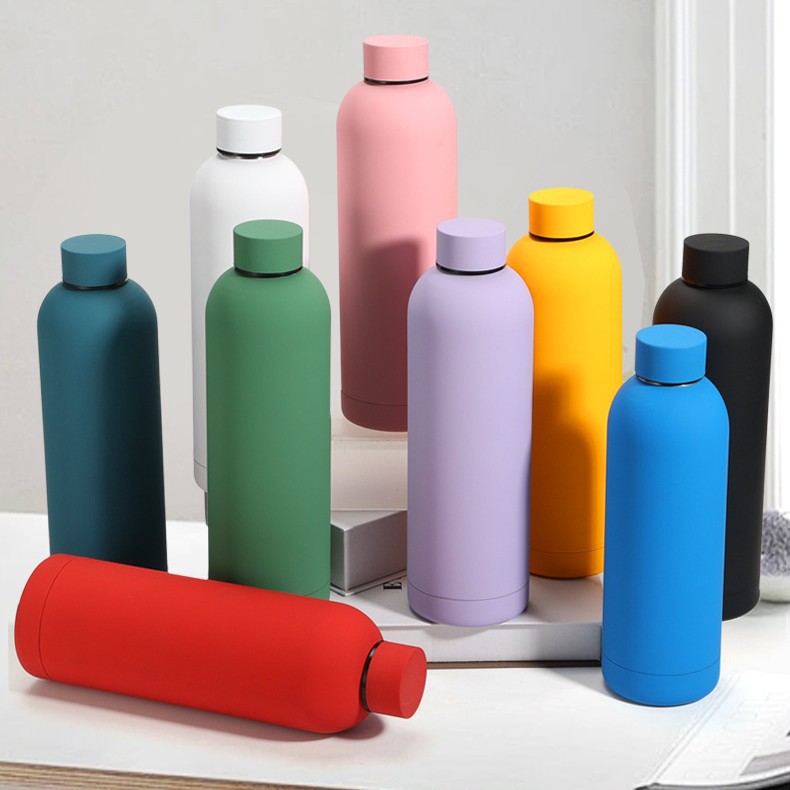
China produces the majority of the world's stainless steel drinkware because the supply chain is fully clustered — steel, lids, silicone, coating, printing and packaging are all available within the same industrial regions. For buyers this means lower cost, faster sampling and the widest range of shapes and customization in one place.
The trade-offs to manage are communication, quality verification and logistics — all of which this guide addresses below.
How do you verify a reliable drinkware factory?
Verify a factory with a short due-diligence checklist before placing any order. Most sourcing failures come from skipping verification, not from bad luck. Run through these five checks for every shortlisted supplier:
- Business license & scope — confirm the legal entity and that "manufacturing" is in its registered scope.
- Factory audit — request a live video tour or a third-party audit (BSCI/Sedex) of the actual production floor.
- Samples first — always order pre-production samples and test insulation, leak-proofing and finish before bulk.
- Certificates on file — ask for FDA / LFGB food-contact reports tied to the exact material, not generic copies.
- References & reviews — check trade-platform history, transaction records and existing export clients.
OEM vs ODM: which customization model fits you?
Choose OEM when you have your own design and want it manufactured; choose ODM when you want to brand the factory's existing models. Most B2B buyers start with ODM (faster, lower risk) and move to OEM once volumes justify custom tooling.
| Model | Best for | Customization | Typical cost |
|---|---|---|---|
| ODM | Brands wanting fast launch | Logo, color, packaging on existing molds | Lowest — no tooling fee |
| OEM | Buyers with proprietary designs | Custom shape, capacity, lid via new molds | Higher — one-time mold cost |
Common customization options include silk-screen and laser logo, Pantone color matching, powder or rubber-paint coating, custom lids and straws, and gift-box packaging with private-label inserts.
304 vs 316 stainless steel: which should you choose?
Use 304 stainless steel for everyday water bottles and 316 for premium or acidic-beverage use. Both are food-grade; 316 adds molybdenum for higher corrosion resistance, which matters for coffee, salt-electrolyte drinks and seawater environments. For most water and cold-drink bottles, 304 offers the best value-to-performance balance.
- 304 (18/8) — food-grade, rust-resistant, cost-effective; the industry default for water bottles.
- 316 (marine grade) — superior corrosion resistance; preferred for premium lines and acidic or salty contents.
- 201 — lower-cost outer shells only; never specify 201 for the inner liner that contacts liquid.
Which certifications actually matter for export?
The certifications you need depend on your destination market, but food-contact safety reports are non-negotiable everywhere. Always require documentation that ties the certificate to the specific material and product, not a generic factory certificate.
- FDA — required for the United States (food-contact materials).
- LFGB — the stricter standard for Germany and the EU.
- BSCI / Sedex — social-compliance audits required by many retailers and brands.
- ISO 9001 — quality-management system certification.
- Reach / Prop 65 — chemical-compliance for the EU and California.
What about MOQ, pricing and lead time?
Typical MOQ for custom stainless steel bottles runs from 500 to 3,000 units per design, sampling takes about 5–7 days, and bulk production 25–35 days after sample approval. MOQ drops for stock models with logo-only branding and rises when custom molds are involved. Always confirm whether a quote is FOB, CIF or EXW before comparing prices.
From sample to bulk: the production process
A standard custom order moves through six stages: quotation, sampling, sample approval, bulk production, quality inspection and shipping. Building in time for a pre-shipment inspection (PSI) protects you from receiving defective bulk goods and is standard practice for experienced importers.
Shipping and importing from China
Most drinkware ships by sea in 20ft/40ft containers; air freight is reserved for samples and urgent top-ups. Factor in your country's import duty and food-contact compliance clearance when budgeting. A capable manufacturer will provide the HS code, packing list and certificates needed for smooth customs clearance.
Why work with Muchuang
Muchuang (Zhejiang Muchuang Industry & Trade Co., Ltd.) is a 6+ year insulated-drinkware factory with a 5,000 m² plant and 200+ skilled workers, producing 304/316 vacuum bottles, tumblers, coffee mugs, sports bottles and food jars with full OEM/ODM service and food-grade material traceability — exactly the factory-direct profile this guide recommends verifying.
Frequently asked questions
What is the MOQ for custom water bottles?
Most factories set 500–3,000 units per custom design. Logo-only branding on existing models usually carries a lower MOQ than fully custom-molded products.
How long does production take?
Plan for roughly 5–7 days for samples and 25–35 days for bulk production after you approve the sample. Peak season (Q3) can extend lead times, so book early.
Is 304 stainless steel safe for drinking water?
Yes. 304 (18/8) is food-grade and the industry standard for water bottles. For acidic drinks or premium lines, 316 offers higher corrosion resistance.
Can I get my own logo and packaging?
Yes. Custom logo (silk-screen, laser, UV print), Pantone colors, custom lids and private-label gift packaging are standard OEM/ODM services for bulk orders.
Do you provide samples before bulk orders?
Reputable factories provide pre-production samples so you can test insulation, leak-proofing and finish before committing to bulk. Always approve a physical sample first.